
Brahman Hills Serenity Garden: A 22-hectare labyrinth of art and nature
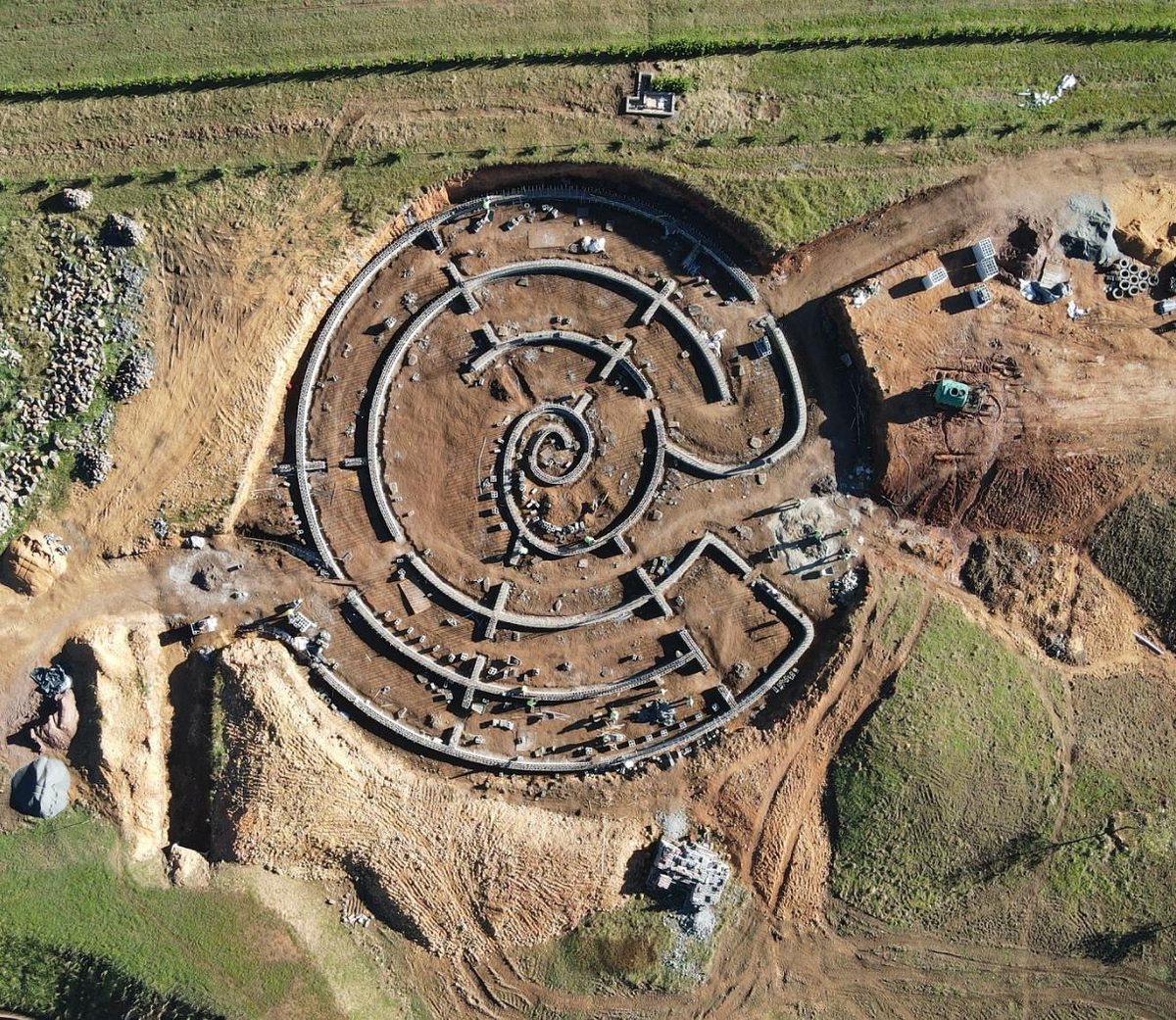
Nestled in the Blue Crane Nature Reserve in Nottingham Road, KwaZulu-Natal, the Brahman Hills Serenity Garden is set to become a landmark of landscape design and cultural legacy. Spanning 22 hectares, this contemporary labyrinth combines large-scale earthworks, seasonal planting and integrated art to create a space for meditation, contemplation and exploration.
A visionary project
Tim Steyn designed the Serenity Garden, with Iain Buchan envisioning the concept. This modern interpretation of a labyrinth features multiple pathways for walking meditation and leisurely strolls. A double hedge of sweet viburnum and Leyland cypress encloses the garden, while 6km of exposed-aggregate concrete paths guide visitors through a series of immersive landscapes.
The project, now more than halfway complete, is on track for its grand opening at the end of 2026. It aims to leave a 100-year legacy, blending ecological sustainability with cultural enrichment.
Landscape engineering and planting strategy

The Serenity Garden’s design showcases remarkable engineering and horticulture. Extensive earthworks shape mounds, valleys and tunnels, while dry-packed local Midlands stone forms walls, streams and waterfalls. The team relocated extra-large trees and introduced tens of thousands of nursery-grown plants.
The planting strategy divides the garden into seven zones, each tailored to the Midlands’ climate and design intent:
- Salvias and wild grasses: For texture and movement.
- Aloes and succulents: Adding structure and drought resistance.
- Cherry blossom and azaleas: Seasonal colour highlights.
- Indigenous mist-belt forest and thicket: Supporting local biodiversity.
- Open grassland: For expansive views.
- Mixed woodlands: Featuring non-invasive oaks, maples, and liquidambar.
Seasonal sequencing ensures year-round interest, with autumn, winter, and spring highlights designed to support biodiversity through nectar sources and nesting habitats.
Key features and artistic elements

The Serenity Garden is punctuated by striking features and art installations that enhance its contemplative atmosphere:
- Stone Labyrinth: A spiral of dry-packed stone surrounded by curated aloes and succulents.
- Dragon’s Eye: An intimate waterfall enclosure.
- The Way of Water: A double gorge of waterfalls, including a larger cascade with a pool overlooked by Sandro Trapani’s 4.5m sculpture, ‘Hanneke’.
- Olive Tree Garden: Featuring historic olive trees.
- African Art House: Showcasing works by Jane Bedford and Alex Zaloumis.
- Underground Orchid House: A curated indoor plant collection.
- Meditation Mound: A serene space with a sky aperture.
Sculptures by Tyron Selman and other artists are strategically placed along the pathways, creating moments of reflection and surprise.
Overcoming challenges
The project has faced its share of challenges, including unpredictable Midlands weather and delays in approvals. However, the experienced team, known for prior award-winning projects, has successfully mitigated risks to keep the project on schedule.
A cultural and ecological legacy
The Brahman Hills Serenity Garden is more than a destination – it’s a long-term cultural and ecological legacy for the Midlands. Its fusion of large-scale landscape engineering, seasonal planting choreography, and contemporary art invites slow, repeated visits, offering new discoveries with each season.